
Skip to content

Little Rock, Arkansas

Plain-language content for health plans and healthcare organizations.

Written by someone with 17+ years inside the health and ancillary insurance industries — nine of them in-house at a Blues plan. Your members do not need more content. They need to understand the content you already have.

Send one member-facing document. We score it, mark it up, and you keep the markup.

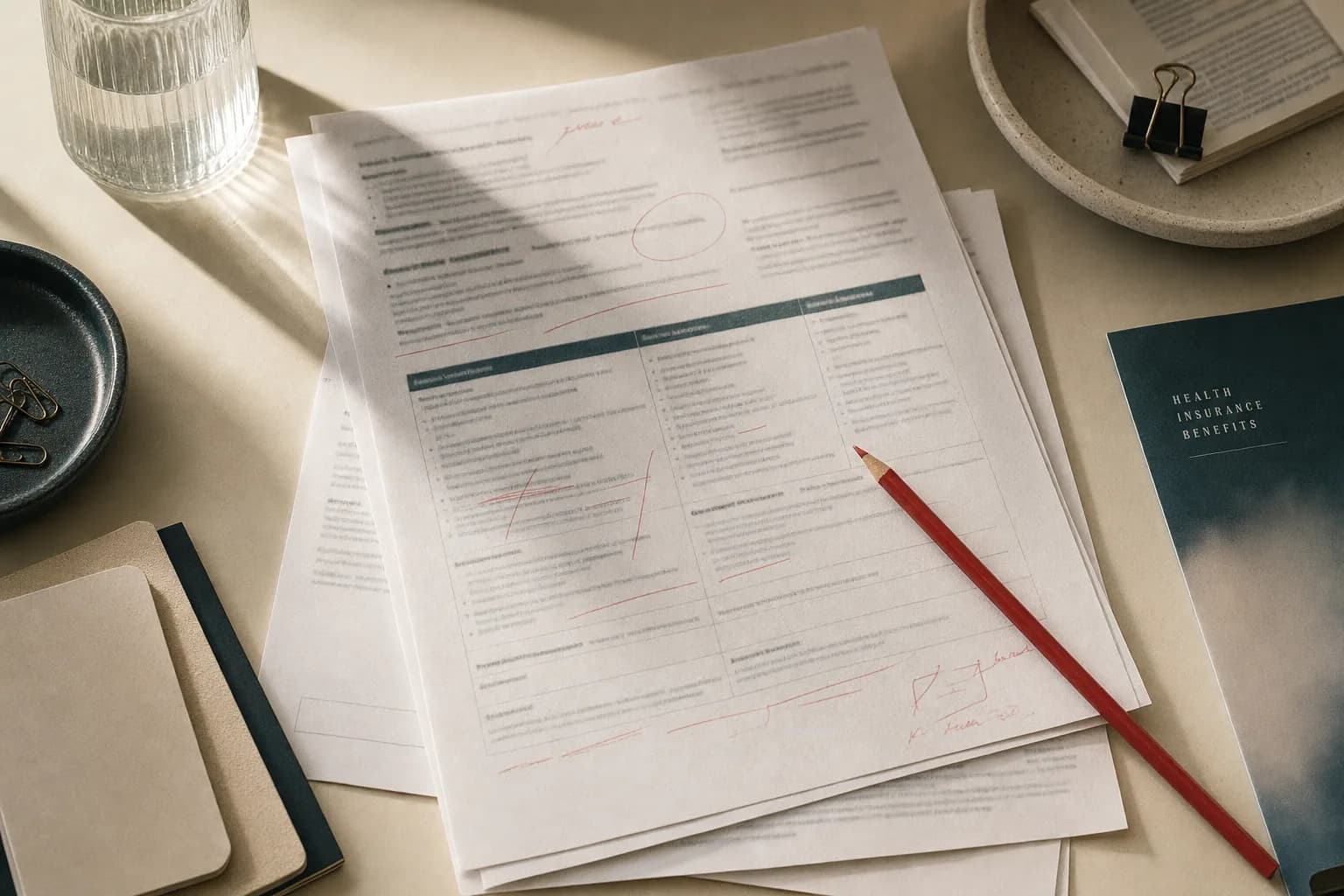
A stack of printed health-insurance benefit documents on a desk, the top page marked up by hand with a red editing pencil.

17+

Years inside the health and ancillary insurance industries

3

Payers as clients — two Blues plans and an ancillary carrier

42%

Facebook follower growth from the #TGFI campaign she built and ran

8%

Contribution to the 2016 lift in private-option sales among millennial members

The 42% and 8% are from the #TGFI campaign at Arkansas Blue Cross and Blue Shield, where she built and presented the ROI case that got the social media program approved at the executive committee.

The actual problem

Nobody sets out to write an unreadable denial letter.

It happens because the sentence has to satisfy a compliance reviewer, a regulator, a legal team, and a member — and only one of those four is in the room when it gets edited.

So marketing writes it clearly, compliance sends it back, marketing gives up, and the member calls. The loop is not a people problem. It breaks when the writer already knows what the reviewer will object to.

That is the entire job. Accuracy and readability are not a trade-off — they are a craft problem, and it is a craft that takes years inside the industry to learn.

Close-up of a red editing pencil resting on a printed page with several lines struck through.

What we actually do

Here is the work, on the homepage, before you ask for it.

Readability scores below are computed from the text itself — Flesch–Kincaid grade level, words per sentence, and the share of three-syllable-plus words. Nothing is typed in by hand.

Explanation of benefits · the single most-called-about document

This is not a bill

Grade 19.75.2

Before

This document constitutes an explanation of benefits and does not represent a request for payment. The amounts reflected herein represent the provider's submitted charges, the contractual adjustment applied pursuant to the network agreement, the portion adjudicated as the plan's liability, and the residual amount which may be the responsibility of the member subject to applicable deductible and coinsurance provisions.

Grade level
19.7
Post-graduate
Words
59
Words / sentence
29.5
Long words
34%

After

This is not a bill. It is a summary of a claim we already processed for you. It shows four things: what your doctor charged, the discount your plan got, the part we paid, and the part you may still owe. Your doctor's office will send you a separate bill for that last amount. If the two documents do not match, call the number on the back of your card before you pay anything.

Grade level
5.2
Grade 6 or below
Words
74
Words / sentence
14.8
Long words
8%

What changed and why

  • Moved the one sentence members need to the front: this is not a bill
  • Turned four abstract nouns into four things the reader can point at
  • Added the missing step — the real bill comes later, from someone else
  • Told them what to do when the numbers disagree, which is when they call

Grade level is Flesch–Kincaid, computed from the text above. The formula counts sentence length and syllables, so short sentences score low — a 3.0 is not three times better than a 9.0. The target for member-facing material is usually sixth to eighth grade; the judgment about whether a rewrite is still accurate and complete is editorial, not arithmetic.

Selected clients

Payers, practices, and publications.

Organised by who buys, not by what was delivered. Every entry on the work page states an outcome rather than an intention.

  • Arkansas Blue Cross and Blue Shield
  • Blue Cross of Idaho
  • USAble Life
  • Central Arkansas Ophthalmology
  • All For Kids Pediatric Clinic
  • Ronald McDonald House Charities of Arkansas
  • ESAC
  • Arkansas Times
See the full roster with outcomes →

Who does the work

Two people. Content and analytics, strategy and build.

Heather Iacobacci-Miller — founder and content specialist. Nine years in-house at Arkansas Blue Cross and Blue Shield, two consulting for Blue Cross of Idaho, six ongoing with USAble Life, and nine years of technical writing at Northrop Grumman before any of it.

Jason Miller — VP and analytics specialist, with 20+ years in web content, analytics, and site development. On website engagements he is the developer, which is why we can quote content and build together rather than handing you off.

More about both of us →
  • MA, Professional and Technical Writing — UA Little Rock
  • Certified Usability Analyst — Human Factors International
  • BA, Professional and Technical Writing — UA Little Rock
  • HubSpot Content Marketing and Social Media certified

Send us one document. We will show you the rewrite.

A free 30-minute plain-language audit of any member- or patient-facing document. We score it, mark it up, and walk you through what we would change. You keep the marked-up copy either way.